
Build it, buy it, or let someone run it. Which one fits your dealership.
Build your own platform, licence software and run it yourself, or bring in a partner who handles the whole operation. Most dealers pick based on what feels familiar. This guide helps you pick based on what actually fits your situation.
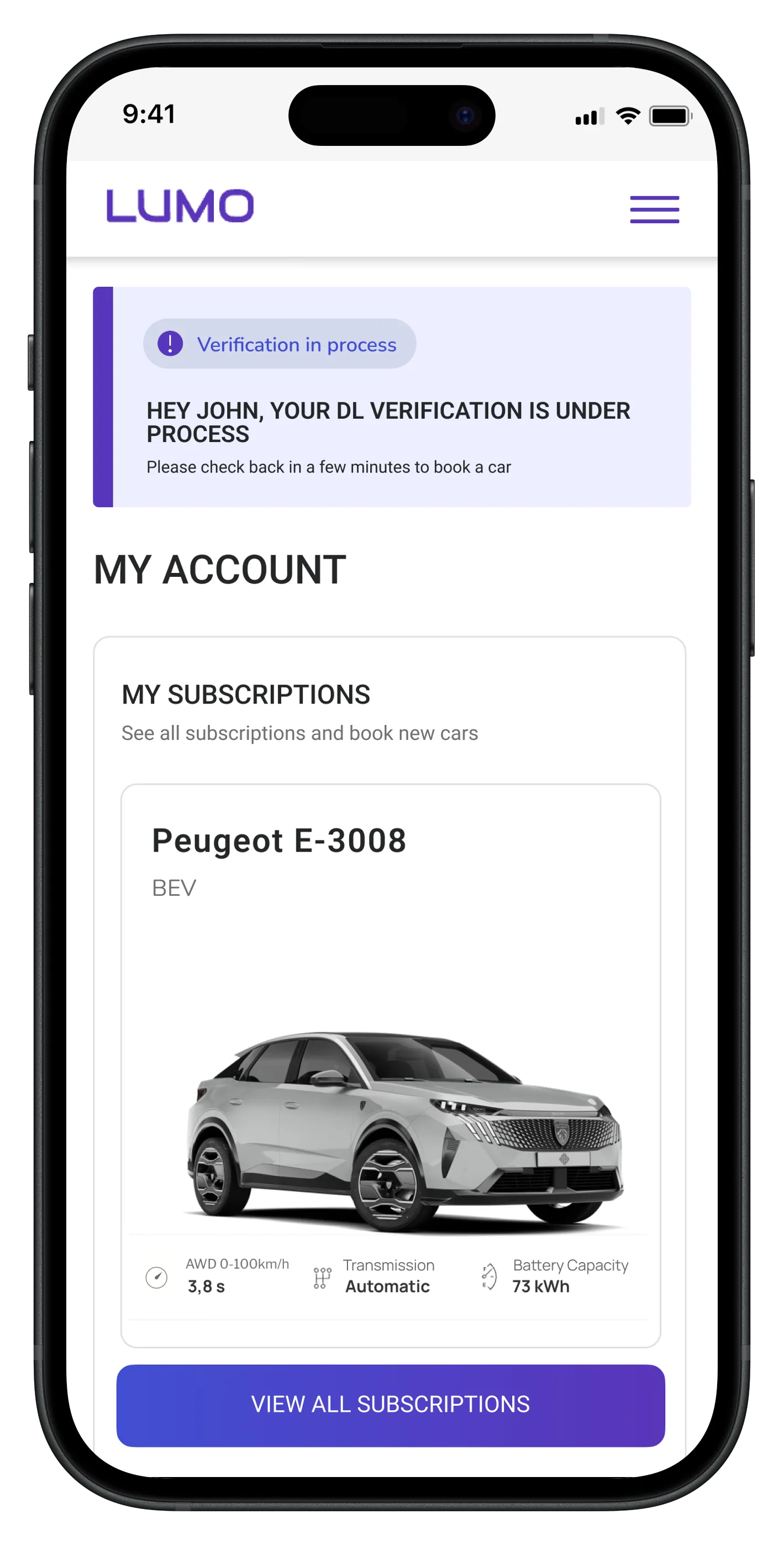
Three options side by side
Each path trades speed for control and cost for complexity.
.svg)
.svg)

The full scope of what running a subscription programme requires.
Understanding why the numbers look the way they do requires seeing the full scope of what running a subscription programme involves. Dealers who only think about the software layer consistently underestimate what they are taking on with options one and two.

The software layer
Customer sign-up, identity and licence verification, credit checking, digital contract generation, recurring billing with payment failure handling, and fleet management. Most platforms cover some of this. Very few cover all of it without gaps that land back on your team.

The compliance layer
Insurance structures for short-term multiple-driver vehicles. Consumer credit regulations around subscription agreements. Data protection requirements for identity verification. These cannot be bolted on later. They need specialist input and add real cost and time to any build.

The marketing layer
A website that explains subscription clearly enough that customers understand before they enquire. Search visibility for the keywords people use when looking for flexible vehicle access. Content that educates. Consistent demand generation over months, not a launch campaign.

The ongoing layer
Platform maintenance and updates. Compliance changes as regulation evolves. Infrastructure that scales with your subscriber base. Support for your team when edge cases come up. Someone accountable for all of it, permanently.
Building your own platform. The real cost and timeline.
Complete control over every part of the product. Your brand, your pricing logic, your customer experience, your data. For a dealer group with a dedicated technology team and a long-term commitment to subscription as a core line of business, there is a version of the world where this makes sense.
For most franchise dealers, the timeline is 12 to 18 months before you have something robust enough to put in front of customers at scale. That is 18 months of development cost and 18 months without subscription revenue, spent building something companies like JRNY have already spent years refining.
The compliance piece is usually what surprises dealers most. Insurance structures for subscription vehicles, consumer credit regulations, data protection requirements for identity checks. These need specialist input before you start and they add real cost and real time to the project.
Licensing software. What you get and what still sits with your team.
Licence a platform and run the programme on top of it. Faster than building. Typically operational within weeks. The core technology is already built and someone else maintains it. For dealers who come to this option with genuine marketing capability and an internal owner with real bandwidth, it can work well.
The trade-off is that you are buying a tool, not a programme. The software handles what it handles. Marketing, demand generation, customer acquisition, operational training, insurance structuring, and compliance guidance are all your responsibility on top of the platform cost.
The most common failure mode for dealers on this path is not the platform. It is building a perfectly functional subscription infrastructure and having no subscribers to put through it because the marketing capability was not there when it needed to be.
Working with a full-service partner. What is included and what you give up.
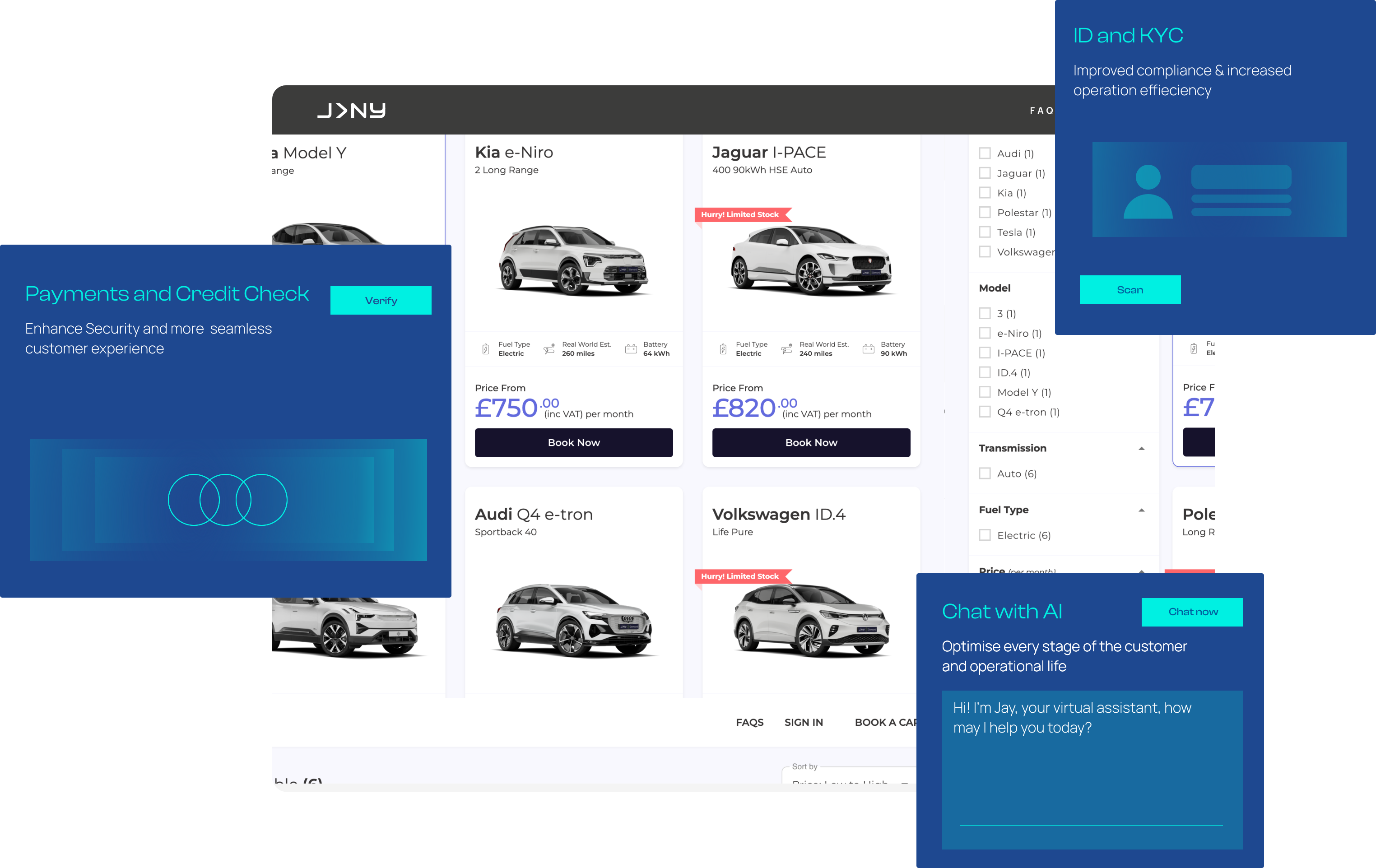
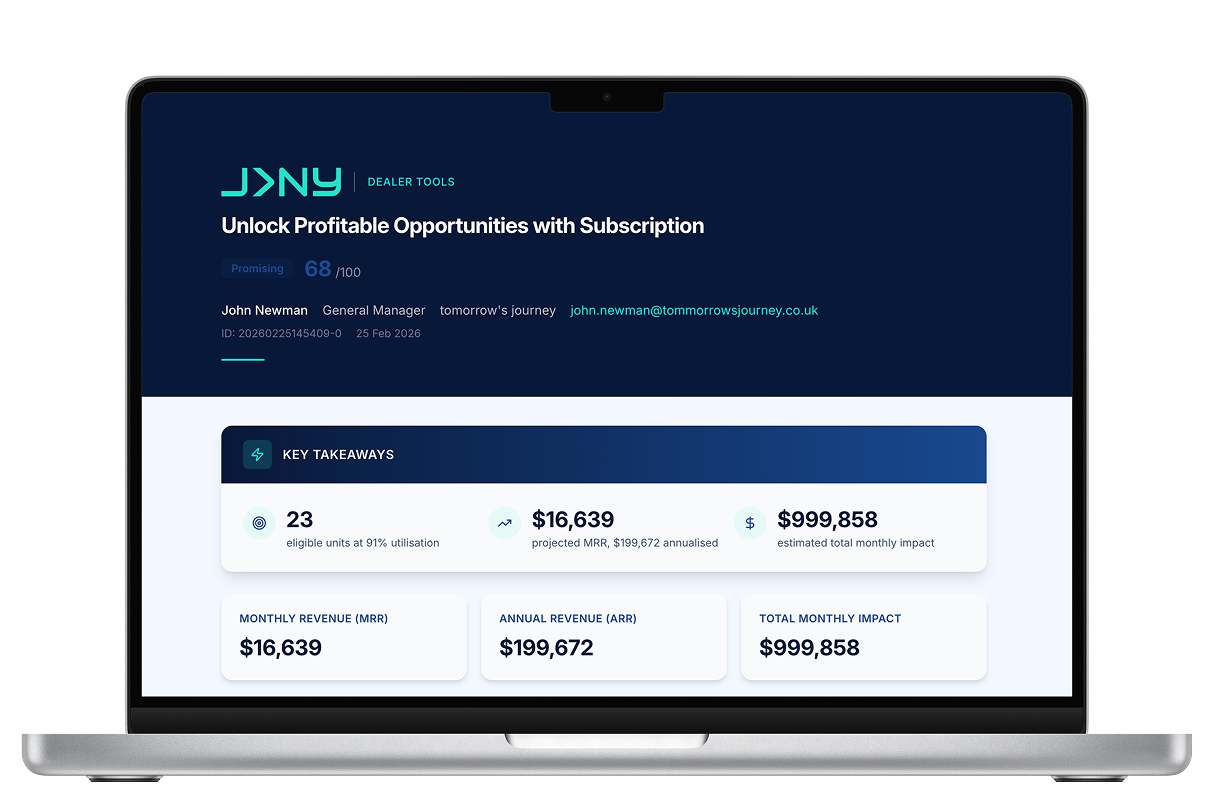
A partner provides the complete operational stack. Platform, marketing, website, demand generation, launch support, and ongoing operational coaching. All under your brand. You provide the cars and the dealership relationship. The partner runs the programme infrastructure.
The trade-off is that you are not building proprietary technology. You are running on infrastructure someone else owns and maintains. For most franchise dealers who have looked honestly at the cost and timeline of the alternatives, that is a reasonable division of labour.
The question to ask when evaluating a full-service partner is not what they provide at launch. It is what their involvement looks like six months after go-live. A partner who is hands-on at launch and then steps back is not full-service in any meaningful sense. A partner who keeps your subscriber base growing month after month is.
Five questions worth answering before you make the decision.
Answer these honestly before you commit to any of the three options. Most dealers find the decision becomes obvious once they work through them.
.svg)
How quickly do you need revenue from this?
If the answer is within six months, building is off the table. The question then is whether you have the internal capability to run off-the-shelf effectively, or whether the gap between what the platform provides and what you need means full-service is the more practical answer for where you are right now.
Who in your business will own this programme?
Subscription needs a real internal owner, particularly if you go the off-the-shelf route. If that person does not currently exist in your business, account for the time and cost of finding them before you commit to a platform that depends on them being there.
How strong is your marketing operation, really?
Most dealers answer this more generously than the evidence supports. Running effective demand generation for a new product category is sustained, specialist work. If your current marketing is primarily co-op activity, off-the-shelf leaves you with a working platform and no subscribers to put through it.
Do you need to own the technology long term?
If proprietary subscription technology is genuinely part of your competitive strategy in five to ten years, building eventually makes sense. If you want a programme that generates reliable recurring revenue from your idle inventory in the near term, that ambition can wait without costing you anything.
What does getting this wrong actually cost you?
An 18-month build that does not work is a very different failure to a full-service programme that underperforms in month three. One is recoverable quickly. One is not. Know your own risk tolerance before you choose, not after you have committed to a path.
Why King Windward chose full-service and what happened next.
King Windward Nissan had no dedicated technology function, no subscription marketing capability, and a clear need to generate recurring revenue from idle inventory without taking on complexity that would distract from running the dealership. They chose full-service with JRNY. They were live in under 45 days. They did not hire anyone new.
The decision to go full-service meant they had a functioning, revenue-generating programme in under six weeks. Not the right outcome for every dealer. But for a franchise dealer without a technology team, without a subscription marketing operation, and with a genuine need to see results from idle inventory quickly, it is a useful data point.
Monthly recurring revenue
Days to operational launch
Active subscribers year one
New hires required

"Their training staff was knowledgeable, flexible, and hands-on, which helped us get up and running quickly and confidently."
FAQs
The questions dealers ask once they are close to making a call.
Yes. Moving from off-the-shelf to full-service is manageable. Moving from a proprietary build to a managed platform is more involved. Starting with the right option for where you are now is meaningfully easier than switching later. Treat this as the decision you are making for the next two years, not forever.
Your subscriber data, vehicle data, and revenue data should always remain yours. Any reputable partner will have clear contractual terms around data ownership and portability. Ask for this explicitly before you sign anything and make sure the answer is in the contract, not just the conversation.
Ask them specifically what their involvement looks like in month six and month twelve. What does ongoing demand generation involve week to week? Who owns subscriber acquisition after launch? A partner who cannot give clear, specific answers to these questions is probably not as full-service as they present.
Some platforms offer implementation support and marketing as add-ons. Quality varies considerably. The question is whether those services are genuinely capable or whether they are light-touch support that leaves the real work sitting with you. Ask for specifics, not descriptions.
Still have questions?
Let's talk through your situation.
Ready to decide?
Twenty minutes on a call usually clarifies which path makes sense for your dealership right now.
