Your Loaner Fleet Is a Revenue Center You're Not Using. Here's How to Fix That.
Most dealerships treat their service loaner fleet the same way: as a customer satisfaction cost that comes with running a serious service department. That framing is not wrong, but it is incomplete. The vehicles sitting in your loaner pool are already paid for, already insured, already maintained, and already registered. What most dealers have never seriously asked is whether those assets could generate income during the hours, days, and weekends they sit idle between service appointments. Learning how to monetize dealership inventory you already own is not a stretch play. It is a straightforward operational question, and the answer tends to surprise dealers who run the numbers for the first time.
The Utilization Problem Nobody Talks About
Service loaners do not run at anything close to full utilization. They can't, by design. The loaner program exists to serve service customers, and service demand follows patterns: weekday mornings are busy, afternoons are quieter, and weekends produce almost no service-driven loaner demand at all. Vehicles return in clusters as repair orders close out. They sit between service windows, overnight, across the weekend, and during any seasonal dip in service traffic.
Industry data supports how wide that utilization gap actually is. Dealerware, which manages loaner fleets for hundreds of dealerships, has noted that most dealerships fail to reach 80 percent utilization on their loaner vehicles, with multiple operational factors contributing to chronic underuse. A separate analysis cited by US Tech Automations in 2026 found that dealerships with 10 to 25 loaner vehicles typically operate at 55 to 70 percent utilization. At a 30 percent idle rate on a 15-vehicle fleet, the estimated lost utilization value runs between $8,000 and $15,000 per year, calculated against OEM warranty reimbursement or equivalent rental day rates.
That figure is not the ceiling. It is the cost of underutilization alone, before considering whether the idle time could be generating active income rather than simply not generating its maximum service reimbursement.
The reasons for the idle time are not complicated. Loaner coordination at most dealerships still runs on a combination of spreadsheets, handwritten logs, and institutional knowledge held by two or three service advisors. Nobody owns the full picture. Double-bookings happen. Vehicles sit ready but unassigned because nobody looked. A car returned at 5pm on a Thursday sits until Monday morning because there is no mechanism to do anything with it between then and now.
What Those Idle Hours Actually Cost
The holding cost framework from the previous article in this series applies directly here. A service loaner that is not generating income is not a neutral asset. It is accruing insurance, depreciation, and overhead every day it sits, regardless of whether it is making money.
WardsAuto, drawing on data from Colonnade Advisors, placed the total daily holding cost for used vehicles at $50 to $85 per day when depreciation is included. A loaner vehicle carries the same cost structure as a used unit on the back lot: floorplan or capital cost, insurance, lot overhead, and physical depreciation. The label on the vehicle is different. The financial reality is not.
For a dealership carrying 15 loaners at an average value of $25,000 each, the total capital at work in that fleet is $375,000. At an 8 percent cost of capital, the annual carrying cost is $30,000 before depreciation, insurance, and maintenance are added. Spread across the fleet, each vehicle needs to contribute meaningful value to the operation simply to justify its own cost of ownership, let alone generate a return.
During active service rotation, loaners deliver that value indirectly through service revenue retention and customer satisfaction. Cox Automotive research shows that 74 percent of customers who return for service at the dealership that sold them their car are likely to repurchase from that same dealer, compared to 44 percent of those who did not return for service. Loaners are a meaningful part of what makes those service visits happen. That retention value is real and should not be discounted.
But that value only applies while the vehicle is serving a service customer. When a loaner is sitting idle overnight, across the weekend, or in the gap between two repair cycles, it is not generating any return on the $25,000 it represents. It is simply a depreciating asset with a monthly cost.
The Structural Gap: Designed for One Job, Sitting Unused for the Rest
The core problem with loaner fleet economics is structural. The fleet was sized and acquired to handle service demand at its peak, which means capacity almost always exceeds demand during off-peak windows. A dealership that needs 15 loaners to cover its busiest Tuesday morning will have vehicles sitting unused by Wednesday afternoon, will have most of the fleet idle by Saturday, and will have all of them idle by Sunday night.
This is not a failure of fleet management. It is an inherent feature of a fleet designed for a specific, time-bound operational purpose. The question is whether that inherent idle time can be redirected toward a revenue-generating activity rather than simply accepted as the cost of service capacity.
The traditional answer has been no, primarily for operational reasons. Running any kind of rental or access program alongside a service loaner fleet requires its own administrative layer: customer acquisition, booking management, contracts, billing, damage documentation, and vehicle availability coordination. Layering that onto a service department that is already managing repair orders, parts delays, customer communication, and advisor scheduling sounds like adding headcount and complexity to an operation that has little room for either.
That is the correct objection to a manual approach. It is not a valid objection to the right software.
Why Manual Has Always Been the Wrong Tool
Before looking at how to monetize dealership inventory through the loaner fleet specifically, it is worth understanding why most prior attempts at this have failed.
The standard loaner management process at most dealerships runs on a combination of a DMS module, a whiteboard, and whatever system the service director built themselves over time. Contracts are paper or generic PDFs. Billing does not exist for most service loaners because they are provided free. Damage documentation is a walk-around at checkout and a verbal acknowledgment at return. Vehicle availability is tracked in someone's head, a spreadsheet column, or a handwritten log on the service desk.
That process works adequately for its intended purpose: getting a loaner to a service customer for one to three days and getting it back. It works because the transaction is simple, the relationship is tied to an open repair order, and the service advisor can manage the exceptions manually without the operation falling apart.
Extending that process to cover subscription-style use, like recurring monthly billing, customer KYC verification, digital contracts, automated payment collection, mileage tracking, damage recovery — all requires infrastructure the typical DMS does not provide. Attempts to do it manually produce exactly the outcome you would expect: one or two staff members buried in coordination work that does not scale, inconsistent contract execution, billing that depends on someone remembering to collect it, and damage disputes with no documentation to support the dealership's position.
The shift that makes loaner monetization viable is purpose-built software that handles all of those functions automatically, without adding a single headcount to the service department.
How Software Changes the Loaner Revenue Equation
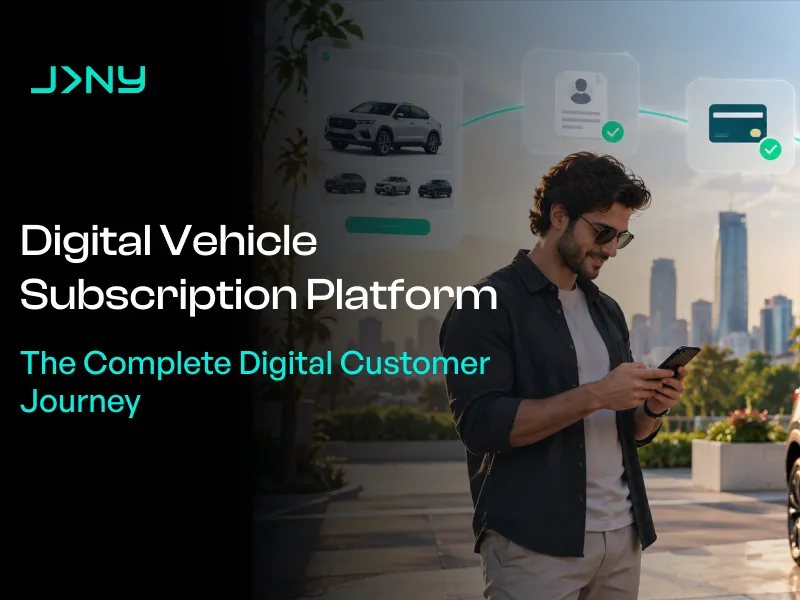
Modern automotive subscription platforms approach this differently from the DMS-plus-spreadsheet model that most dealers are working around today. Rather than extending the service loaner workflow, they create a parallel customer journey that runs digitally from sign-up to return, operating on a different schedule from the service cycle without interfering with it.
The operational model works because the two use cases are not actually in conflict. Service loaners are primarily in demand Monday through Friday during service hours. The subscription use case fills the gaps: the overnight periods, the weekends, the shoulder windows between active service cycles. A vehicle that returns from a service customer on Thursday afternoon can be available for a short-term subscriber from Thursday evening through Monday morning. It returns before the Monday morning service rush without ever disrupting the service operation.
The software layer that makes this work handles several functions simultaneously:
Digital onboarding and KYC verification
A prospective subscriber completes identity verification, driving licence checks, and eligibility screening through a digital flow before ever receiving a vehicle. No service advisor manages this. The system handles it and flags the result. This is the risk control step that most manual programs miss entirely, and it is what makes the difference between a confident dealer and a nervous one when it comes to putting a subscribed vehicle in a customer's hands outside the service context.
Automated billing
Monthly charges or per-period fees run automatically on schedule. Failed payment retry logic runs without manual intervention. Variable charges, mileage overruns, and damage assessments attach to the subscriber's billing record and collect without someone on the team having to follow up. For dealers accustomed to providing loaners free of charge, the shift to billing-enabled access is significant: a vehicle that previously generated zero direct revenue now generates predictable income during every period it is subscribed.
Digital contracts and damage documentation
Subscriber agreements are generated, signed, and stored within the platform. Vehicle condition is documented digitally at handover and return, with photographic evidence linked to each subscriber record. Damage disputes that would otherwise require matching a service advisor's memory against a customer's recollection are resolved by opening the digital record. Dealerware's own analysis noted that undocumented damage claims cost dealerships between $800 and $2,500 per incident in parts, labor, and customer goodwill. Proper documentation eliminates most of that exposure.
Fleet availability management
The system tracks which vehicles are in service rotation, which are available for subscription, and which are in maintenance. Service advisors see loaner availability in real time and can allocate without conflicting with active subscriber assignments. The two programs share the fleet without interfering with each other because the availability data is centralized.
A vehicle subscription program for dealerships built on purpose-built automotive software, such as the JRNY Platform, handles this full stack within a single system. The platform's digital customer journey, automated billing engine, and fleet management layer were built for exactly this use case: taking vehicles that are already in a dealer's possession and creating a managed, low-friction revenue channel around them without disrupting the primary operation.
The Revenue Math on a Modest Loaner Fleet
The numbers do not require an aggressive scenario to look compelling. Consider a franchise dealer with 15 service loaners. At current utilization patterns, perhaps 8 to 10 are active during the service week at peak times, with 5 to 7 regularly available during off-peak windows, weekends, and overnight periods.
If five of those vehicles are made available for subscription use during the windows they are not needed for service, at a conservative monthly access fee of $650 per vehicle, the revenue potential from a 70 percent utilization rate on that pool is approximately $2,275 per month, or roughly $27,300 per year. That is not projecting aggressive subscription pricing or optimistic utilization. It is a conservative estimate on five vehicles that were previously generating no direct income during those periods.
Scale that to ten vehicles in the subscription pool at the same conservative figures and the annual revenue potential approaches $55,000. Against the carrying cost of a 15-vehicle loaner fleet at $375,000 in capital, that starts to make a material difference in the return profile of the fleet.
The calculation changes further when you consider the downstream retention effect. Dealerware's research found that 70 percent of car owners say they will return to a dealer for their next car purchase if that dealer provided them with a service loaner. A subscription program extends that relationship beyond the service visit. Subscribers who access a dealer's vehicles on a recurring basis are not passing customers. They are regular touchpoints, and the data on what service and access relationships do to repurchase intent is consistent across every study that has examined it.
Who Manages This Without Extra Staff
The operational concern that stops most dealers from pursuing this is a reasonable one: who runs it? Service departments do not have spare capacity. Adding a manual coordination function on top of an already busy service desk is not a realistic proposal.
The answer is that the right software does not add coordination work to the service team. It removes it. The digital onboarding, billing, contract management, and damage documentation run automatically. The service advisor's interaction with the subscription program is limited to checking vehicle availability in the same system they already use for loaner tracking, and confirming that a vehicle returned from a subscriber is inspection-ready before it enters service rotation.
The more substantive operational question is who owns the program at the management level. As discussed in the dealership readiness framework in this content series, subscription programs require a senior owner who reviews the program's metrics weekly and makes decisions about fleet allocation, pricing, and subscriber management. That does not require a new hire. It requires a dealer principal, GM, or fixed ops director who takes accountability for a 30-minute weekly review and uses the data the platform provides to make informed decisions.
Platforms like JRNY that make this work seamlessly, are designed for exactly this operating model: lean team, automated workflows, senior oversight rather than daily manual management.
The Practical Starting Point
The cleanest entry point for most franchise dealers is not their entire loaner fleet. It is the vehicles that have aged out of active service rotation but have not yet been remarketed: loaners that have passed their OEM minimum mileage thresholds, cleared their incentive windows, and are now sitting in the fleet as titled used vehicles waiting for the retail process to begin.
These vehicles are the ideal subscription pilot candidates. They are already maintained. They are already titled to the dealership. They carry none of the new-vehicle franchise complications. And they are typically the vehicles that generate the most holding cost anxiety, because they are no longer serving their original purpose but have not yet entered the retail pipeline.
A pilot of 10 to 12 vehicles from this segment, run through a purpose-built subscription platform for 60 to 90 days, produces real utilisation data, real billing history, and a real answer to the question of whether the economics make sense for that store's specific market and customer base. It does not require a strategic commitment before the data exists to support one.
To get a vehicle-level estimate of what a subscription pilot could generate from your existing fleet, the JRNY dealer ROI calculator takes dealer-specific inputs and produces a conservative monthly revenue projection before any commitment is made.
To sum up,
The loaner fleet is the one asset in a dealership that is already paid for, already insured, already maintained, and already idle for significant portions of every week. Learning to monetize dealership inventory you already own, rather than letting it sit between service cycles generating nothing, is not a complex operational leap. It requires the right platform, a defined pilot scope, and one senior owner who is paying attention to the numbers.
The vehicles are already there. The question is whether they are working.
Frequently Asked Questions
1. What does it mean to monetize dealership inventory through the loaner fleet?
A. Monetizing dealership inventory in this context means generating direct revenue from service loaner vehicles during the time they are not actively serving service customers. That idle time, overnight periods, weekends, and mid-week gaps between repair orders, represents a significant portion of the loaner fleet's available hours. By creating a subscription or short-term access program using purpose-built automotive software, dealers can bill subscribers for access during those windows without disrupting the primary service operation. The vehicles stay available for service use during active service hours and generate income during the periods they would otherwise sit unused.
2. How do you improve loaner vehicle utilization at a dealership?
A. Most loaner fleets run at 55 to 70 percent utilization, according to industry data, primarily because the coordination infrastructure, reservations, return tracking, availability management, is handled manually through spreadsheets and DMS workarounds. The first improvement lever is digital tracking that gives the service team real-time visibility into availability, which prevents double-bookings and accelerates vehicle turnaround after return. The second lever, for dealers looking to generate revenue rather than just improve service efficiency, is extending availability beyond the service use case through a subscription program that fills idle windows with paying subscribers.
3. Will a loaner subscription program interfere with the service department's operations?
A. Not if it is structured correctly. Service loaners are primarily in demand during weekday service hours. Subscription use primarily fills overnight, weekend, and off-peak gaps. A platform that tracks real-time fleet availability prevents both use cases from claiming the same vehicle simultaneously. The service desk sees which vehicles are available and assigns them without needing to know anything about the subscription schedule. The subscription platform handles its own onboarding, billing, and customer management automatically. The two programs share the fleet without operationally conflicting because the availability data is centralized in one system.
4. What software do dealerships need to run a loaner subscription program?
A. Standard DMS modules and spreadsheet-based tracking are not adequate for a billing-enabled subscription program. The functions required, digital KYC verification, automated recurring billing, digital contract generation and storage, damage documentation with photographic evidence, and real-time fleet availability tracking, need to be native to a single platform rather than assembled from separate tools. Purpose-built automotive subscription software handles all of these functions automatically without adding coordination work to the service team. The JRNY Platform is one example of a system built specifically for this use case, covering the full subscriber journey from digital onboarding through automated billing and fleet management.
5. How much revenue can a dealership generate from a loaner subscription program?
A. The answer depends on fleet size, available windows, and subscription pricing, but a conservative estimate for five vehicles made available at $650 per month at 70 percent utilization generates approximately $27,000 per year in direct revenue from inventory that was previously generating nothing during those periods. Larger loaner pools or higher subscription pricing produce proportionally higher figures. The JRNY dealer ROI calculator takes dealer-specific inputs, including fleet size, vehicle values, and floorplan rate, to produce a vehicle-level estimate before any commitment is made.

More from the blog
Explore what others are learning