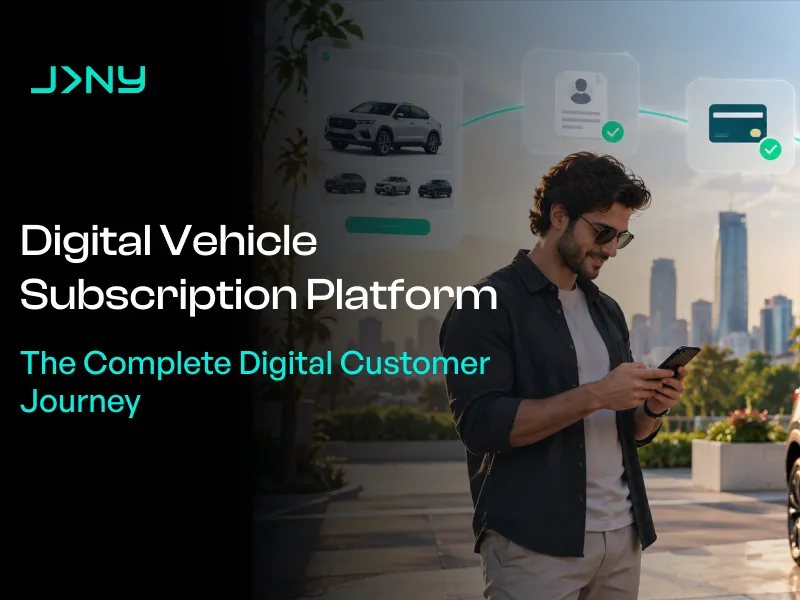
Is Your Dealership Ready for Vehicle Subscription? A 4-Point Checklist for Franchise Dealers

There's a version of the vehicle subscription conversation that treats the model like a moonshot - a bold mobility bet that requires vision, courage, and a willingness to disrupt your own business. That's not the version worth having. The more useful version starts with a simpler question: is my dealership ready for subscription as a recurring revenue channel to move aging used cars and cover overhead? That's it. No grand mobility narrative required.
The dealers who have launched successful subscription programs in 2024 and 2025 didn't do it because they believed in the future of transportation. They did it because they had a pool of aged or off-cycle inventory generating carrying costs with no clean retail exit, and they found a more productive use for it. If you want to reduce aged inventory without heavy discounting, subscription is one of the most operationally direct ways to do it - but only if your lot clears four specific readiness markers first.
This checklist covers all four. It also covers who subscription is not right for, which is a question that gets less airtime than it should.
Condition 1 and 2: Inventory Depth and Location Demand
These two conditions are evaluated together because neither one works without the other. Inventory without local demand produces an empty booking calendar. Demand without sufficient inventory produces subscriber churn and bad reviews. Both have to be present.
Do You Have the Inventory Depth to Run a Pilot?
The floor for a meaningful subscription pilot is 10 vehicles. Below that, availability gaps appear fast - a subscriber wants a specific tier, that tier is fully booked, and the program loses credibility before it has a chance to build momentum. The practical pilot range is 10 to 25 vehicles, which is large enough to generate real monthly recurring revenue within the first billing cycle and small enough to stay manageable within existing staff capacity.
The vehicles in that pilot pool should not come from your retail-ready front line. They should come from your aged inventory tail - units sitting in the 45-to-90-day range on your used lot, or off-cycle vehicles that are no longer carrying strong retail urgency. Loaner vehicles that have aged out of their service fleet window are another natural source. Many franchise dealers are sitting on a loaner pool that was purpose-built for short-term use, is already maintained, and is already registered - all it lacks is a subscriber and a billing cycle.
According to NADA 2025 dealership financial data, franchised dealers collectively wrote more than 276 million repair orders in 2025 and generated over $164 billion in service and parts revenue. That service volume is sustained, in part, by loaner fleets that are expensive to maintain but generate no direct revenue outside of customer retention. Redirecting even a portion of that idle loaner stock into a subscription channel turns a cost center into a revenue line without disrupting the primary service operation.
If your lot does not carry an aging used inventory tail or an idle loaner pool large enough to support a 10-vehicle pilot without pulling vehicles from active retail pipelines, the timing is not right. Wait until the inventory conditions change - and they tend to, faster than expected when floorplan rates stay elevated.
Is Your Market Location a Fit?
Inventory readiness is the supply side. Location demand is the customer side. Both have to exist.
The markets that produce consistent subscription demand share a recognizable profile. High-density urban and suburban areas where commuter patterns create steady baseline need. Proximity to military installations, where active-duty personnel on 2-to-3 year postings need a vehicle but have zero interest in a 60-month loan on a car they'll leave behind at reassignment. University corridors, where graduate students, visiting faculty, and incoming staff create a rotating customer base of people who need a car for 9 to 18 months and don't qualify for competitive lease terms or choose not to commit to them. Corporate hubs with contractor populations, where relocation-driven short-term residents are one of the cleanest subscription customer profiles that exist.
The King Windward Nissan FlexRide case in Hawaii is a textbook example of location demand stacking correctly. Oahu has a large active-duty military population at Joint Base Pearl Harbor-Hickam, a transient contractor economy, seasonal retiree traffic, and a geographic constraint - it's an island, so there's no "driving to the mainland" option. The demand was there. The inventory was there. The program worked.
Your market doesn't need to be Hawaii. But if you're running a single-point rural store with stable local traffic, low churn in your customer base, and no meaningful demand from military, university, or transient professional populations, the subscription model will underperform regardless of how well the platform is configured.
Condition 3: Internal Accountability Over Spreadsheet Management
Passing the inventory and location tests still leaves the operational question: who runs this without adding a headcount line?
The answer is senior owner accountability - not a new hire, not a new department, but a designated senior operator who owns the program's performance and uses the platform's automated workflows instead of manual tracking. Subscription doesn't require a dedicated staff member if the operational layer is automated. What it does require is someone whose name is attached to the program's outcomes and who will actually use the tools instead of reverting to a spreadsheet the moment something unexpected happens.
This matters more than it sounds. The most common failure mode in dealership subscription pilots is not customer demand - its internal drift. A GM who was genuinely interested in launch loses focus six weeks in. The billing cycle runs fine because it's automated, but damage check procedures start to slip. Subscriber communications get delayed. Vehicle turnaround after return gets slower. None of these individually break the program, but together they create a subscriber experience that generates churn instead of renewals.
The fix is not complicated. It's clear ownership, a platform that handles the operational complexity, and a defined 30-minute weekly review of the program's metrics. Subscription works at small pilot scale precisely because the platform - a purpose-built vehicle subscription program for dealerships absorbs the billing, agreement execution, damage documentation, and customer communication that would otherwise require dedicated staff time.
What the platform cannot replace is the dealer principal or GM who is actually paying attention. If your store culture doesn't support one senior owner taking accountability for a new revenue channel without immediately pushing it down to the most junior available person, the operational readiness isn't there yet. That's a meaningful signal, and it's worth being honest about before you configure the pilot fleet.
Condition 4: Franchise Guardrails and OEM Parameters
For franchise dealers, this point generates the most hesitation - and it's also the one that gets resolved fastest when the right inventory strategy is applied.
Most OEM franchise agreements place restrictions on new-vehicle subscription programs. The definition of "subscription" in many franchise contexts overlaps with daily rental, short-term leasing, or fleet operations - categories that carry their own incentive clawback risks and OEM compliance requirements. The restrictions are real, and dealers who ignore them do so at their own risk.
The resolution that smart operators use is simple: run the subscription fleet exclusively through used or off-lease inventory. Vehicles that are already titled, already de-floored, and already sitting on the used side of the operation carry none of the new-vehicle franchise restrictions. They are assets the dealer owns outright, and how those assets are monetized is the dealer's business. A 2022 Nissan Rogue that has aged off the new-vehicle floorplan and sits on the used lot as a retail unit is not subject to Nissan's franchise parameters when it gets assigned to a subscription fleet. It's just a used car being monetized in a different channel.
This distinction carries real operational weight. Dealers who structure their pilot around used inventory - the aged, off-cycle, or loaner-converted units already generating holding costs - sidestep the franchise compliance question entirely. The program runs outside the OEM's franchise perimeter, which means no incentive exposure, no compliance risk, and no call to the regional field rep required.
If you are a franchise dealer who wants to use current-model-year demo stock or new inventory in a subscription program, that conversation does need to happen with your OEM and your dealer counsel before you launch. The risk profile is different, and the answer will vary by brand. For the majority of pilots that start with aged used stock, however, this pillar is a pass rather than a blocker.
The Hard Truth: Who Subscription Is Not For
This section exists because most subscription vendors skip it, which is not particularly useful for dealers trying to make an honest assessment.
Vehicle subscription is a bad fit for hyper-rural dealerships with no meaningful transient demand population. If your market is a single-point store in a low-density rural area where the same families have been buying cars from you for 30 years and turnover in the customer base is minimal, the subscription customer profile does not exist in your local market in any meaningful volume. Building a program for customers who aren't there is an operational distraction, not a revenue channel.
It is also a bad fit for stores that are already turning used inventory fast with strong floorplan liquidity. If your used cars are moving in 30 days at solid gross, you don't have an aged inventory problem and you don't need an alternative exit channel. The subscription model solves a specific inventory problem. If that problem doesn't exist on your lot, neither does the reason to build the program.
And it's a bad fit for transaction-volume operators with no interest in building recurring revenue. Subscription requires a slightly different mindset than pure transaction volume - the goal is to extend vehicle lifetime yield rather than clear units as fast as possible. If the management culture at your store is entirely oriented around units sold per month and nothing else, the metrics that matter in a subscription program (MRR, subscriber retention, service absorption) will feel foreign and won't get the attention they need.
None of this is a judgment. It's a practical read on fit. A GM who goes into a subscription pilot with honest expectations about whether the model suits their market will make better decisions than one who launches because it seemed like a good idea and someone gave a compelling presentation.
Your 15-Minute Readiness Check
If your lot clears all four pillars - inventory depth in the 45-to-90-day range, a market with localized demand variables, a senior owner who will take accountability for the program, and a used-inventory structure that sits outside franchise guardrails - you have the conditions for a pilot that can generate real monthly recurring revenue within the first billing cycle.
The next step is putting a number on it. Run your current lot through the dealer subscription ROI calculator, plug in your floorplan rate, your aged inventory days, and your current gross-per-used-unit, and let the output tell you what that idle stock is actually costing you per day versus what it would generate per month in a subscription channel. The comparison takes 15 minutes and replaces a lot of abstract debate with a specific number.
Then book the 15-minute working session with the JRNY team. Not a demo. Not a pitch deck. A session where your specific lot gets mapped to a pilot scope and you leave with a launch timeline rather than a concept.
The dealers who are running subscription programs today started with a readiness check, not a vision statement. The four pillars either pass or they don't. If they pass, the math tends to make the decision on its own. This is a vehicle subscription program dealership channel decision - and the ones who treat it that way are the ones who build programs that actually compound.
FAQ: Dealership Subscription Readiness
1. What happens when a subscriber abuses the vehicle - excessive wear, unreported damage, or mileage overruns?
This is the most common concern dealers raise, and it deserves a direct answer. Mileage overruns are charged automatically at the per-mile rate defined in the subscriber agreement - the platform tracks it, bills it, and documents it without requiring manual intervention. Damage is captured at every handover through AI-powered vehicle inspection tools that produce timestamped, photo-documented condition reports at sign-out and sign-in. Any damage outside normal wear and tear is charged against the subscriber's payment method on file. There is no grey area and no "my word against yours" dispute, because the condition record is digital and generated at the point of exchange.
Operators who have run subscription programs for 12 or more months consistently report that subscriber vehicle treatment is comparable to - and often better than - short-term rental behavior, because subscribers have an ongoing relationship with the program and a purchase option they may want to exercise.
2. How does the subscription model protect against depreciation eating into vehicle residuals?
Mileage caps are the primary mechanism, and they work on multiple levels:
- Monthly limits (typically 1,000 to 1,500 miles depending on tier) keep annual accrual around 12,000-18,000 miles - within the range that commands strong retail and auction pricing at 12 months
- Overages are billed automatically at a per-mile rate, so a subscriber who drives more generates more revenue rather than silent depreciation
- Revenue of $7,000 to $9,500 cumulative over 12 months at mid-range pricing means the vehicle has recovered its depreciated capital well before it rotates out
- Maintenance stays in your service lane under the subscription terms, so condition at rotation is documented and dealer-controlled, not a guessing game
3. Can a subscriber cancel at any time, and what does that do to monthly revenue predictability?
Subscribers can cancel or pause, and well-designed programs build that flexibility into the product deliberately. The pause-without-penalty feature that FlexRide uses, for example, is a subscriber retention tool. A subscriber who pauses a subscription because of a three-month work assignment maintains their relationship with the program rather than canceling permanently. The revenue predictability in a well-run pilot comes from the subscriber base as a whole, not from any individual subscriber. A fleet of 20 to 25 vehicles with a 70 to 80% utilization rate produces consistent MRR even with normal subscriber turnover, because the platform's availability logic fills vacated slots rather than leaving vehicles idle.
4. What about contract termination for non-payment or subscriber misconduct?
Automated payment retries handle most non-payment situations before they escalate. For genuine breach or misconduct, the agreement defines the notice period, termination trigger, and vehicle recovery protocol. Because the dealer holds title throughout, recovery is straightforward - no lien holders, no repo complications.
5. Do I need to inform my OEM before launching a subscription pilot on used inventory?
For a pilot built entirely around used or off-lease vehicles that are already de-floored and titled to the dealership, the general consensus among operators who have launched is that no OEM notification is required - the program runs outside the new-vehicle franchise parameters. That said, every franchise agreement is different, and the definitive answer for your specific brand and market should come from your dealer counsel, not a platform vendor or a blog post. The due diligence step takes less time than most dealers expect, and doing it before launch removes any ambiguity.

More from the blog
Explore what others are learning