The Digital Customer Journey Powered by the JRNY Platform
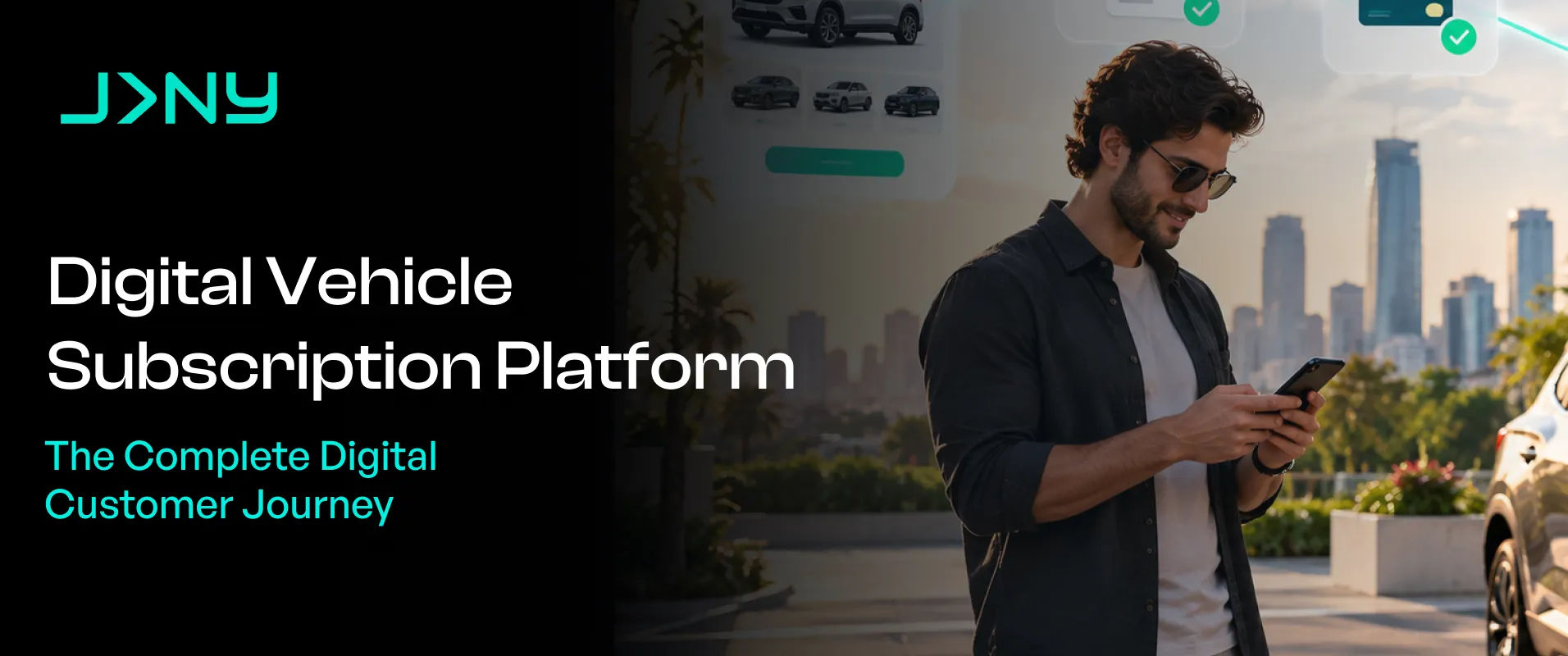
Every gap between what a customer wants to do online and what they can actually do online becomes a reason to abandon a subscription signup before it finishes. That gap is exactly what a digital vehicle subscription platform exists to close, and it's a bigger problem than most dealerships realize until they try to run subscription operations on top of tools built for a different kind of sale.
The scale of the gap is well documented in traditional car buying. Cox Automotive's Car Buyer Journey Study found that 48% of buyers want to apply for credit online, but only 33% actually do, and 40% want to select finance and insurance products online against just 16% who complete that step digitally. Every one of those gaps represents a customer who wanted a digital option and didn't get one, which is precisely the failure mode a subscription program can't afford, since subscription customers tend to expect an app-like experience from the moment they start browsing. Let’s take a look at how the JRNY platform comes into play at not only enhancing the overall digital customer experience, but also at retaining those relationships.
Why the Digital Customer Journey Matters
A traditional vehicle purchase is a single, high-friction event with one big decision at the end. A subscription is a recurring relationship with several decision points spread across signup, tier changes, renewals, and eventual return or conversion. That structure means friction compounds instead of appearing once. A clunky signup doesn't just delay one sale, it sets the tone for every interaction that follows, from the first billing cycle to the eventual renewal conversation.
The same Cox Automotive research found that buyers completing key steps online saved an average of 42 minutes at the dealership, and that 82% of buyers who completed more than half of their required steps online reported high satisfaction with the overall experience. For a subscription program, where the same customer will interact with the platform repeatedly over months, that kind of time saving and satisfaction lift compounds across the life of the relationship rather than happening once.
Step one: browsing and booking without friction
The journey starts before a customer ever commits to anything, with browsing available inventory and choosing subscription terms that fit their situation. On the JRNY Platform, customers browse and select a vehicle from any device, choosing monthly, quarterly, or custom terms based on what actually fits their circumstances rather than being pushed toward a single default option. This stage sets expectations for everything that follows. A customer who has to call a dealership to check availability or confirm pricing before they can even start the process is already experiencing the platform as a barrier rather than a convenience.
Step two: identity verification that's fast without being careless
Every new subscriber needs to be verified before they take a vehicle, and this is the step where speed and security are most in tension. Mobility platforms face a distinct fraud profile here. Signicat's analysis of fraud in mobility platforms notes that synthetic identity fraud is particularly common in the sector compared to other industries, and that a meaningful share of cases, around one in five, still require manual review even with automated checks in place.
That's the balance a subscription platform has to strike: verification needs to be close to instant for the customer, while still catching the fraud patterns specific to vehicle access. The JRNY Platform handles identity and license verification instantly during signup, so a legitimate subscriber isn't stuck waiting on a manual review process that was really built to catch a small minority of bad actors. Getting this step wrong in either direction, too slow or too permissive, damages the platform's credibility with the exact audience it's trying to serve.
Step three: digital contracts that don't feel like paperwork
Once identity is verified, the contract itself needs to be just as fast. Subscription terms, including mileage caps, rotation schedules, and cancellation policies, are sent and signed digitally, with no printed paperwork and no back-office delay between a customer deciding to subscribe and actually being able to pick up a vehicle. For programs like FlexRide, where subscribers can move between tiers at scheduled rotations, the contract logic has to account for those changes upfront rather than requiring a new paper agreement every time a subscriber's needs shift.
This is also where a subscription platform earns or loses trust on transparency. A customer who has to dig through a PDF to find their cancellation terms or mileage allowance is going to call support with a question the interface should have answered on its own. Contracts built for digital-first reading, not just digital-first signing, are what actually reduce that support burden.
Step four: Billing that runs without anyone chasing it
Once a subscription is active, billing has to run correctly and predictably every cycle, since a billing error is one of the fastest ways to turn a satisfied subscriber into a frustrated one. The platform automatically charges the customer, tracks payment success, and gives the dealership full visibility into the billing cycle, so tier changes, pauses, and rotations update the schedule without a manual invoice adjustment each time.
This matters as much for the customer-facing journey as it does for the dealership's back office. A subscriber who sees a consistent, accurate charge every month, with no surprise fees when they switch tiers or pause their plan, trusts the platform in a way that compounds into longer retention and a stronger case for eventually converting to a purchase.
Step five: Self-service that respects the customer's time
The final piece of the digital journey is what happens after signup, when a subscriber wants to check their billing status, request a tier change, or understand their options ahead of a rotation date. A subscriber who has to call or email for routine account questions is having a worse experience than one who can resolve the same question inside the platform in under a minute. Building genuine self-service into the ongoing relationship, not just the initial signup, is what separates a digital customer journey that holds up over months from one that only looks good in a demo.
This is also the stage where most subscription platforms quietly fall short, because it's easier to build a polished signup flow than an equally polished account management experience for the months that follow. A subscriber six weeks into a subscription with a question about their next billing date shouldn't need to remember which email address they signed up with or dig up a contract PDF to find the answer. The information that mattered at signup, mileage allowance, rotation date, monthly cost, needs to stay just as visible and just as easy to find well after the initial excitement of picking up the vehicle has worn off.
Designing for a Customer who Compares before they Commit
Subscription customers don't arrive ready to sign on the spot any more than traditional buyers do. The same broader shift toward exploratory, non-linear shopping that shows up in vehicle purchases applies here too. Cox Automotive's research shows cross-shopping between new and used vehicles has grown to 66% of buyers, up from 57% previously, and that same instinct to compare extends to how people evaluate subscription terms, tiers, and vehicles before committing to one.
A digital vehicle subscription platform needs to support that comparison rather than fight it. Customers should be able to browse multiple vehicles and tiers, compare monthly costs and mileage allowances side by side, and change their mind before signing without starting the process over from scratch. A platform that forces a customer into a single vehicle selection early in the flow, with no easy way to compare alternatives, is optimizing for a shopping behavior that doesn't reflect how people actually evaluate their options anymore. The dealerships getting the most out of subscription are the ones whose platform lets a customer window-shop as naturally online as they would walking a lot in person.
What happens when the digital journey has gaps
The cost of getting these wrong compounds quickly. Industry analysis of scaling subscription operators found that customer touchpoints and operational complexity increase together as a subscriber base grows, meaning the gaps that seem tolerable with twenty subscribers become genuine liabilities at a few hundred. A signup flow that requires a phone call to finish, a contract that needs a manual follow-up, or a billing question that only support can answer all become bottlenecks exactly when a program is scaling fastest and has the least staff time to absorb them.
This is why treating the digital customer journey as infrastructure, not a nice-to-have layered on top of the vehicle side of the business, matters from the first subscriber rather than the hundredth. A gap that costs a dealership one frustrated call a week at low volume costs dozens of frustrated calls a week once the program has grown into the recurring revenue line it was designed to become.
Case in Point: How this came together with Flexride
Nissan’s FlexRide program, powered by JRNY, is a working example of this journey end to end. Customers browse available FlexRide inventory, complete identity verification, and sign their subscription agreement entirely online before ever visiting the dealership in person. The program's structure allows subscribers to pause their subscription at any time without penalty, return the vehicle, and resume later as long as time remains in their access period, all managed through the same digital relationship rather than a phone call to a service desk.
That flexibility is only possible because the underlying platform treats pause, resume, and rotation as native parts of the customer journey rather than exceptions that need manual handling. The dealership reached 60-plus active subscriptions within 60 days of launch, which is a pace that would be difficult to sustain if every pause request or tier change required a staff member to manually rework a contract or reissue a billing schedule.
Why the Connected Journey matters more than any single step
It would be easy to treat browsing, verification, contracts, billing, and self-service as five separate features to check off a list. In practice, the value comes from how they connect. A customer who breezes through verification but then hits a slow, paper-heavy contract process experiences the whole journey as broken, not just that one step. A platform that handles billing flawlessly but has no self-service option forces every routine question into a support queue that shouldn't need to exist.
The JRNY Platform is built around that connection rather than around any single stage in isolation, so a subscriber's identity, contract terms, billing status, and vehicle history all live in one system instead of being stitched together from a CRM, a separate e-signature tool, and a billing platform that don't talk to each other. That's the structural difference between a digital vehicle subscription platform that feels coherent to the customer and one that merely digitizes each step without connecting them.
What a Coherent Digital Journey means for Conversion
A subscriber who has a smooth, connected experience from browsing through billing is a subscriber who is more likely to renew, more likely to recommend the program, and more likely to eventually convert to a purchase, since none of the friction that normally erodes trust in a recurring relationship has had a chance to build up. Dealerships evaluating what a digital vehicle subscription platform needs to actually deliver this experience are better served thinking about the journey as one continuous relationship than as a checklist of individual digital features to implement.
Measuring whether the Digital Journey is Actually Working
None of this is worth building if a dealership can't tell whether the journey is actually performing. Signup completion rate, time from browsing to signed contract, and the share of routine account questions resolved without a support call are the practical indicators of whether a digital customer journey is doing its job. A dealership that only tracks total subscriber count is missing the leading indicators that explain why growth is slowing, or why it might be about to.
Watching those numbers over time also surfaces where the journey still has friction that isn't obvious from the outside. A drop-off between browsing and starting identity verification points to pricing or vehicle selection issues, not a verification problem. A drop-off between verification and contract signing usually points to the contract experience itself, whether that's confusing terms or a process that takes too long. Treating the digital journey as something to measure and refine, rather than something to build once and leave alone, is what keeps it working as a subscriber base grows well past its first cohort.
Key Takeaways
- Digital friction compounds in a subscription relationship because customers interact with the platform repeatedly, not just once at the point of sale.
- Identity verification for mobility platforms has to be both fast and fraud-aware, since synthetic identity fraud is particularly common in the sector.
- Contracts, billing, and self-service need to be built for a customer who expects an app-like experience throughout the relationship, not just at signup.
- King Windward Nissan's FlexRide program shows what a fully connected digital journey looks like in practice, from online booking through pause-and-resume flexibility.
- A coherent, connected journey across every stage drives renewal, referrals, and eventual conversion to purchase more reliably than strong performance on any single step.
FAQs
1. What makes a vehicle subscription platform "digital" versus just having an app?
A genuinely digital platform connects every stage, browsing, verification, contracts, billing, and account management, into one system, rather than digitizing each step separately with tools that don't share data with each other.
2. How does identity verification work for vehicle subscription signups?
Platforms built for mobility use automated document and biometric checks to verify identity almost instantly, while still flagging the small share of cases that need manual review for fraud patterns specific to vehicle access.
3. Can subscribers manage their own account without contacting support?
On a platform built for self-service, subscribers can check billing status, request tier changes, and review upcoming rotation dates directly, without needing to call or email for routine questions.
4. What happens if a subscriber wants to pause their subscription?
On programs like FlexRide, subscribers can pause without penalty and resume later as long as time remains in their access period, with the platform handling the billing and vehicle logistics behind that change automatically.
5. Does a smooth digital journey actually affect whether subscribers eventually buy?
It plays a meaningful role. Subscribers who have a frictionless, trustworthy experience throughout their subscription are more likely to renew and more likely to convert to a purchase, since trust built through the journey carries into the eventual buying decision.

More from the blog
Explore what others are learning