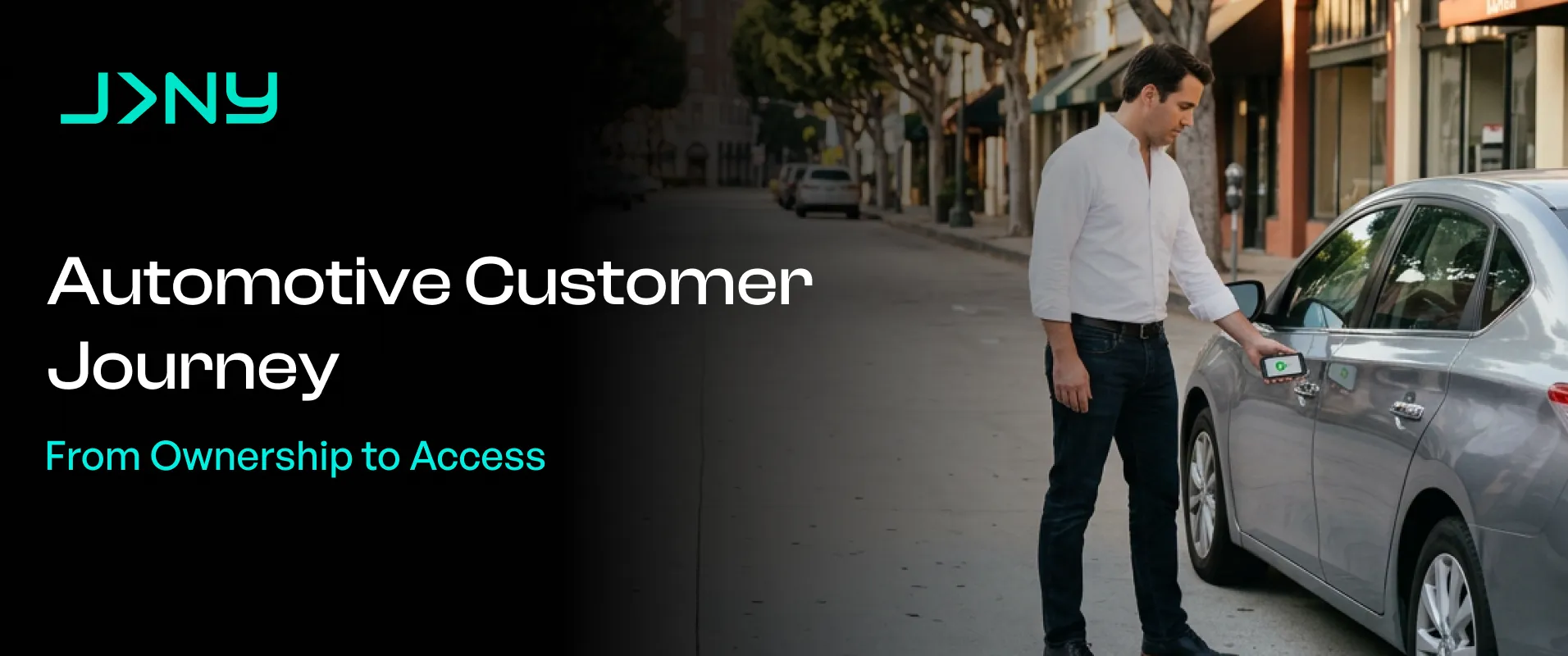
The New Customer Journey in Automotive: From Ownership to Access
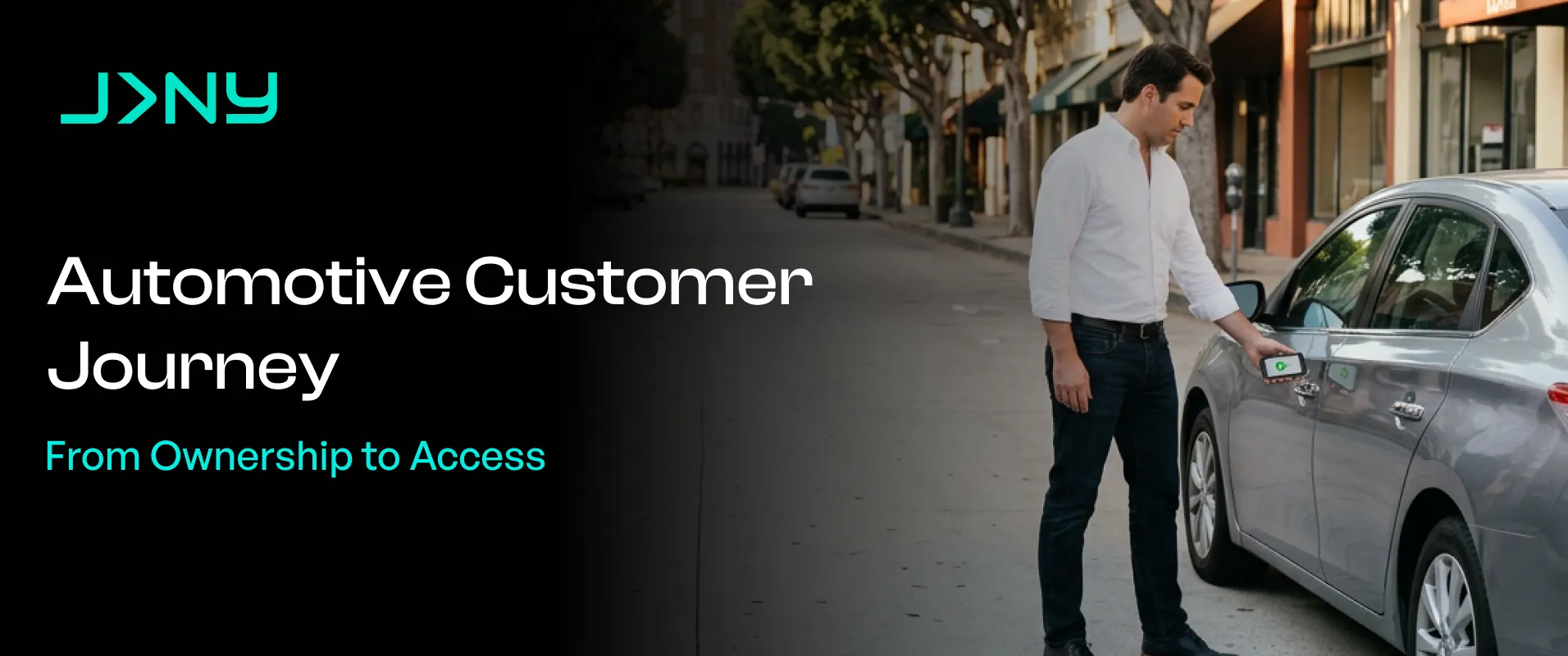
The automotive customer journey used to end in one of two places: a purchase or a lease. Today it increasingly runs through a third option first, a trial period, a short-term subscription, or some other flexible access arrangement that lets a buyer live with a vehicle before committing to it long term. That extra step isn't a detour from the traditional path to purchase. For a growing share of buyers, it has become part of the path itself.
This shift shows up clearly in how much longer and more circular the modern car-buying process has become. According to Cox Automotive's most recent Car Buyer Journey Study, only 7% of buyers complete their purchase entirely online, while 63% say they would actually prefer an omnichannel approach that blends digital research with in-person steps. Buyers aren't choosing between digital and physical. They're building their own sequence out of both, and access-based options like subscription are becoming one more stage they move through before deciding.
How the Automotive Customer Journey has Changed
Ten years ago, the journey was mostly linear: research a few models, visit a handful of dealerships, negotiate, sign, drive home. That version of the journey is largely gone. The same Cox Automotive research found that 66% of buyers now consider both new and used vehicles during their search, up from 57% previously, and cross-shopping now extends across financing structures too, not just vehicle types or brands.
What's driving that expansion is a widening gap between what buyers want to do online and what they're actually completing online. The same study found 48% of buyers want to apply for credit online, but only 33% do, and 40% want to select finance and insurance products online against just 16% who actually manage to. Every one of those gaps is friction, and friction is exactly what pushes buyers to look for an easier way in, which is part of why lower-commitment access models have gained ground.
Separately, an analysis of 2026 auto buying trends found that 71% of buyers start their search without a clear decision already made about what they want, which means most of the journey now happens in a comparison-and-reconsideration loop rather than a straight line toward one predetermined vehicle. A flexible access option fits naturally into that loop in a way a 60-month finance agreement doesn't, because it lets a still-undecided buyer commit to a vehicle for a matter of months instead of years.
Why ownership is no longer the default endpoint
Ownership hasn't disappeared as a goal. What's changed is that it's no longer assumed to be the first or only step. Deloitte's Global Automotive Consumer Study points to continued brand switching and generational divergence in how people think about vehicle access, with first-time owners in particular showing far less loyalty to any single path than buyers did a decade ago.
That divergence matters for dealerships because it means the customer journey now needs to accommodate more than one intended outcome. Some buyers arrive wanting to own outright. Others want short-term access while they figure out what fits their life, whether that's a change in commute, a new city, or simply uncertainty about which vehicle type actually works for them day to day. Treating both groups as though they're on the same linear path toward a sale means losing the second group before they ever reach a showroom.
Try-before-you-buy: Subscription as a new stage in the journey
This is where vehicle subscription has started to occupy real space in the customer journey rather than sitting off to the side as a niche product. A subscription functions as an extended, real-world test drive, long enough for a buyer to learn how a vehicle handles a daily commute, a school run, or a weekend trip, without the commitment of a multi-year loan or lease. Industry coverage of the broader try-before-you-buy trend notes that 30-day trials and month-to-month subscriptions have moved well beyond limited luxury-brand pilots and startup experiments and are now a mainstream option offered by franchised dealers, independent groups, and automakers alike.
That structure changes the shape of the journey itself. Instead of research, decide, buy, the sequence becomes research, try, then decide, with the trying stage happening at a dealership the buyer already trusts rather than through a third-party rental. A subscriber who spends several months driving a specific vehicle arrives at the purchase decision with far more confidence than someone relying on a 20-minute test drive, and a dealership that offers that stage keeps the entire journey, and the eventual sale, in-house. The buyer also gets something a standard test drive can't offer: a real read on how the vehicle handles the parts of daily life that only show up over weeks, not minutes, from cargo space on a grocery run to how the infotainment system holds up on a long commute.
What this means for the traditional path to purchase
None of this replaces traditional sales or financing. Most vehicles are still bought outright or leased, and that isn't changing quickly. What is changing is where subscription sits relative to that traditional path. Rather than competing with a sale, a well-run subscription stage feeds into one, since a subscriber who converts to a buyer already knows the vehicle, already trusts the dealership, and already has a service history on file.
That's a fundamentally warmer lead than a cold walk-in, and it's part of why dealerships are increasingly building subscription in as an early stage of the journey rather than treating it as an alternative to the journey altogether. The dealerships that get this right are designing the access stage and the ownership stage as one connected path, not two separate business lines competing for the same customer. That also means the sales team needs to be looped into how the access stage is going for a given subscriber, since a subscriber approaching the end of a rotation period with strong usage and no complaints is exactly the lead a sales desk should be following up on directly, rather than treating subscription as a self-contained product line that never talks to the rest of the dealership.
Where dealers fit into this new journey
For a dealership deciding whether to add an access stage to its own customer journey, the practical question isn't whether the trend is real. The data on cross-shopping, digital friction, and undecided buyers all point the same direction. The real question is whether the dealership has the infrastructure to run that stage well, since a subscription program that feels clunky or slow undercuts the exact trust it's supposed to build.
The JRNY Platform is built to run that access stage as a fully digital, dealer-branded experience, from browsing and identity verification through contract signing and eventual conversion to purchase, so the subscription stage feels like a natural extension of the dealership's own journey rather than a separate product bolted on. Dealers exploring how a subscription stage fits into their own customer journey can model where it would sit alongside their existing sales and finance workflow before committing to a pilot.
Key Takeaways
- Only 7% of car buyers complete a purchase entirely online, but 63% want an omnichannel journey, meaning access-based stages need to work across both digital and in-person touchpoints.
- Cross-shopping between new and used vehicles has grown to 66% of buyers, reflecting a less linear, more exploratory customer journey overall.
- Gaps between what buyers want to do online (credit applications, F&I selection) and what they actually complete online point to friction that flexible access models can help resolve.
- Subscription functions as an extended test drive stage that sits between research and purchase, not as a replacement for either.
- Dealerships that connect their access stage to their existing sales and finance process convert subscribers into buyers more naturally than those running subscription as a separate offering.
FAQs
1. Is vehicle subscription replacing traditional car buying?
No. Most vehicles are still purchased or leased, and that isn't shifting quickly. Subscription is increasingly sitting alongside the traditional path as an earlier stage in the customer journey, particularly for buyers who aren't ready to commit long term.
2. Why are more buyers considering both new and used vehicles?
Cox Automotive's research shows cross-shopping has grown as affordability pressure pushes buyers to compare more broadly across vehicle types and price points rather than fixing on one category from the start.
3. How does a subscription stage lead to a sale?
A subscriber who spends months driving a specific vehicle typically arrives at a purchase decision with more confidence and less negotiation friction than a first-time walk-in, since they already know the car and trust the dealership.
4. What's the difference between a test drive and a subscription trial?
A test drive lasts minutes and covers a short, controlled route. A subscription trial can run for months and covers real daily use, giving a buyer a far more accurate sense of whether a vehicle actually fits their life.
5. Do younger buyers prefer access models over ownership?
Research points to less brand and ownership loyalty among first-time and younger buyers compared to previous generations, though this varies by market and individual circumstance rather than being a universal preference.

More from the blog
Explore what others are learning